

Precision, Flow, and the Power of Five
How Lean Manufacturing in Electronics Drives Growth
Source: Creation Technologies China Blog & Wujin National High-Tech Zone Official WeChat Account
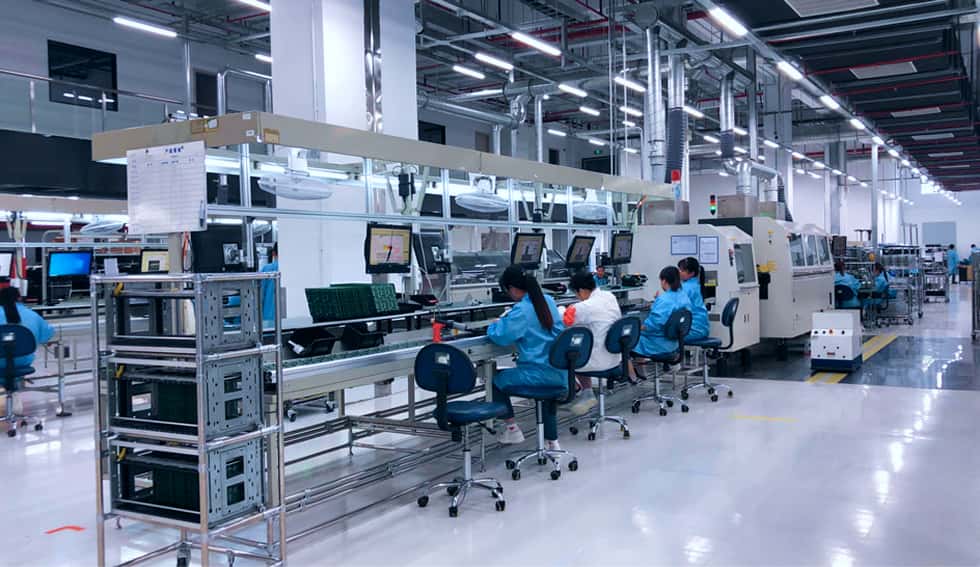
The Foundation: Starting Strong in 2026
Changzhou Creation Technologies had a strong start to 2026. This U.S.-owned manufacturer, with more than 20 years of operations in China, quickly shipped its first post-Spring Festival orders to customers across North America, Europe, and domestic markets.
The numbers reflect steady momentum. High-end industrial sectors continue to drive consistent demand, with order volume projected to increase 15% year-over-year. But volume alone doesn’t guarantee success. The company credits its growth to a pragmatic focus on lean manufacturing practices. How? By translating operational efficiency into real competitive advantage at scale.
Inventory Precision: Managing 40 Million Yuan Down to the Dollar
Electronics manufacturing presents a deceptive challenge: managing complexity at tiny scales. Changzhou Creation Technologies handles over 4,000 types of electronic components. The inventory exceeds 37 million individual pieces. Combined value: more than 40 million yuan.
Most components are smaller than a fingernail. Tracking them across a warehouse requires more than good intentions. It requires systems.
Last year’s annual inventory audit revealed the payoff. The final discrepancy was just US$488 across the entire inventory. This set a new record across Creation Technologies’ global network.
How They Did It: The 5S System
The 5S methodology provides the organizational backbone:
- Sort: Identify what you actually need
- Set in Order: Assign every item a specific place
- Shine: Keep the workspace clean and organized
- Standardize: Build repeatable processes
- Sustain: Make discipline a habit
Sean Hu, Director of Supply Chain, explained the underlying logic: “Inventory accuracy directly impacts cash flow and delivery reliability.” Behind that precise US$488 figure lies rigorous digital control across the entire operation.
From Data to Flow
The company adopted the Toyota Production System’s core principle: make inventory flow. All materials organize into standardized 1,800mm racks and containers. The rule: one item per box, one category per level.
Each of the 15,000 storage locations has a unique 12-digit digital ID. This creates seamless alignment between data coordinates and physical locations. Nothing is guesswork.
On the production line, the company abandoned rigid fixed-station and batch-transfer workflows. Instead, components move in a flexible, single-piece flow model. Synchronized material delivery ensures components arrive at workstations with precision and timing. The system works as one integrated whole.
The Power of Five: Small Team, Big Efficiency Gains
Precise inventory is the foundation. But efficiency gains happen on the production line. Changzhou Creation Technologies proves this with a lean team of just 5 people.
This isn’t about headcount. It’s about applied intelligence. Rather than investing heavily in imported equipment, the team acts as process doctors. They identify inefficiencies and implement low-cost automation solutions.
AGV Implementation: Replacing Manual Handling
The centerpiece of this transformation is Automated Guided Vehicles (AGVs). These replace manual material handling entirely.
Here’s how it works: signal lights at each workstation trigger AGVs to deliver components precisely when and where they’re needed. This eliminates one of manufacturing’s most persistent sources of waste: idle time and human error from manual replenishment runs.
At the water pump controller assembly line, Cindy Liu, Director of Continuous Improvement, walked through the complete system:
- Each workstation holds a fixed number of finished goods
- Completed items move to the next station via gravity rails
- During material changeovers, a signal light triggers an AGV to deliver supplies directly
- Height-adjustable material racks allow operators to work seated, eliminating unnecessary bending
These aren’t flashy changes. They’re the unglamorous work of removing friction, standardizing flow, and letting people focus on value-added work.
The Results: 3x Efficiency in One Line
The water pump controller line is the proof point. After two rounds of improvements:
- Daily output surged from 175 to 500 units (nearly 3x increase)
- Assembly time dropped from 24 hours to just 2 hours
- The entire line runs more smoothly with less manual intervention
Scaling this success across the plant in 2025, Changzhou Creation Technologies achieved approximately 25% overall production efficiency gains. The company now operates:
- High-speed smart SMT (surface mount technology) lines
- 3D AOI (automated optical inspection) systems
- Lead time for surface-mount components: 1.1 days
- Finished product assembly: 3.5 days
“Seemingly small smart tweaks add up to massive gains,” said Cindy Liu. The data backs this up.
Beyond the Warehouse: Two-Way Empowerment Strategy
Discipline on the factory floor translates to market competitiveness. Changzhou Creation Technologies faced a strategic choice: stay export-focused or build resilience through diversification.
The answer: two-way empowerment.
From Export-Dependent to Balanced Growth
Ten years ago, exports accounted for 90% of revenue. Today, domestic business represents 30% of the mix. This shift matters. It builds resilience against external trade dynamics while opening new market opportunities.
“With ample production capacity and 5,000 square meters of expandable space, we are well-positioned for growth,” said Sean Hu.
Targeting High-Growth Sectors
In 2026, the company is targeting two sectors:
- Medical devices
- High-end industrial equipment
The company acquired medical device production licenses in 2025. It has expanded into surgical robot force feedback sensors and endoscopic imaging systems. These products deliver on a core promise: faster, better, and more cost-effective solutions through rapid prototyping capabilities.
The Two-Way Model
Here’s the strategic differentiator: the company leverages overseas networks to help foreign enterprises localize production in China. At the same time, it supports Chinese manufacturers in going global.
This approach draws on technical expertise and proven lean manufacturing results. The company is establishing a benchmark for high-end electronics production in China. In this benchmark, 5S discipline, AGV-driven material flow, and continuous improvement aren’t buzzwords. They’re daily operating reality.
What This Means for China’s Manufacturing
From lean transformation breakthrough to two-way empowerment, Changzhou Creation Technologies demonstrates a clear principle: take technological innovation as one wing and lean management as the backbone. Then continuously climb the global industrial chain.
As a U.S.-invested manufacturer, the company witnesses China’s profound manufacturing transformation. It also writes its own powerful chapter in intelligent manufacturing through daily practice.
Looking forward, Creation Technologies Changzhou continues to deepen its roots in Wujin National High-Tech Zone. Efficiency and innovation remain the driving force. The company composes more dynamic chapters by moving from following the leader to setting the benchmark. This is the new track of high-quality development.